
ICSI (Intracytoplasmic Sperm Injection)
ICSI (Intracytoplasmic Sperm Injection) is an advanced reproductive procedure whereby equine oocytes are retrieved from a mare via transvaginal ultrasound guided needle aspiration of follicles (also referred to as ovum pick up). Follicles are flushed and aspirated in an attempt to retrieve the oocyte within. All follicles on the ovary above 5mm in diameter will be attempted.
Typically, oocyte retrieval is 30-80% of the number of follicles present. Oocytes are processed and packaged in-house, and then couriered to the lab. At the lab, the oocytes are placed in maturation media and incubated for a period of 36-48 hours. Ones that mature are injected with a single sperm cell and left to incubate. If fertilization is successful, oocytes will begin the process of cleavage (cell division). A portion of these will continue to the blastocyst (embryo) stage and can then either be placed in a recipient mare as a fresh embryo, or frozen for later implantation.
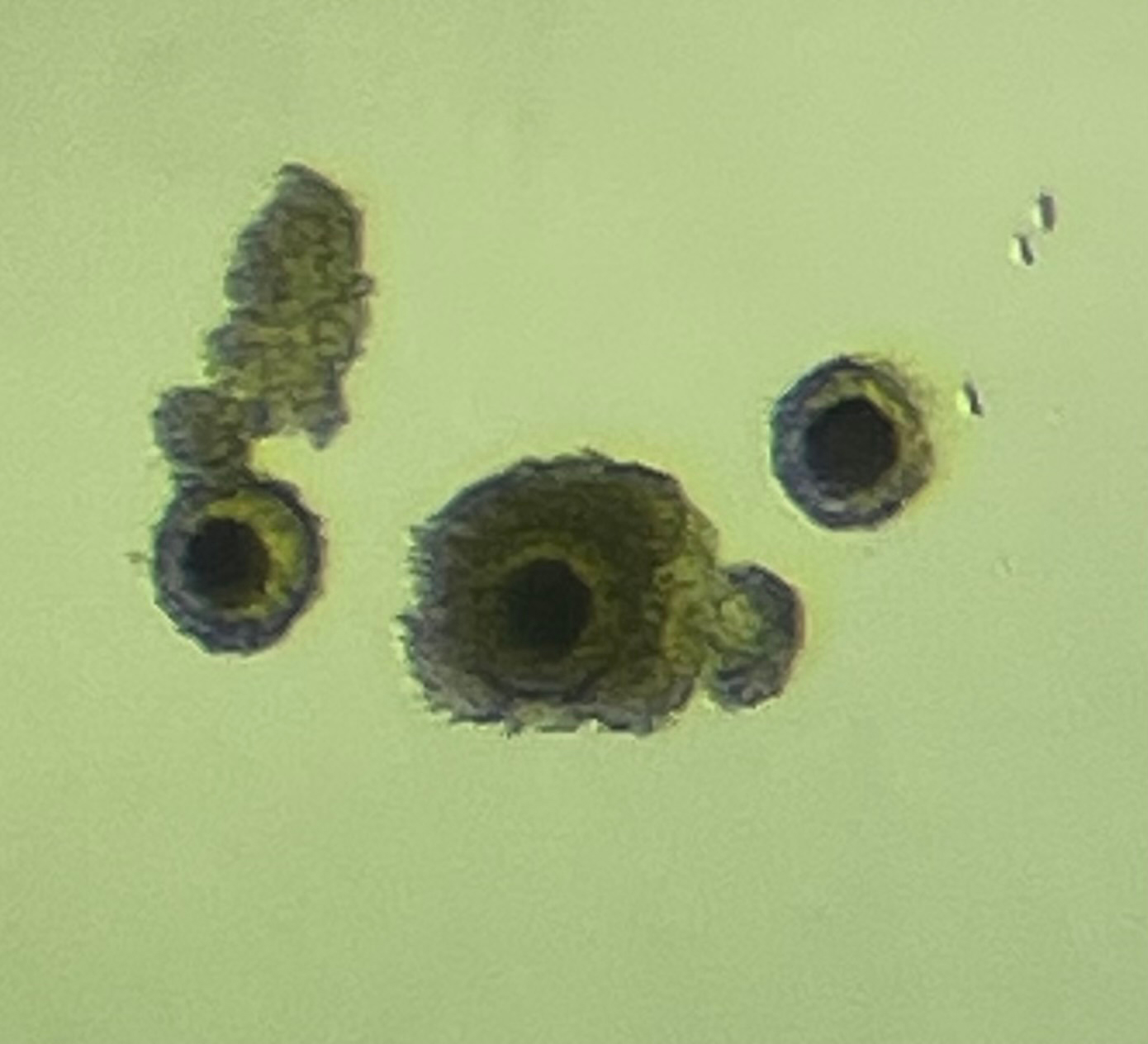
Reasons to utilize the ICSI procedure include:
- ICSI is a day procedure, and because of this show mares can be reproductively active without taking valuable time out of competition or training.
- ICSI allows mares with significant uterine issues to effectively achieve pregnancies while bypassing the uterus.
- ICSI allows mares with valuable genetics to achieve multiple offspring in a season.
- ICSI allows high producing mares to achieve embryo rates that make it more affordable than embryo transfer.
- ICSI ensures minimal use of frozen semen from deceased or high demand stallions.
- ICSI ensures that embryos can be collected and frozen out of season and put in recipients at optimal times.
ICSI procedure challenges may include:
- Unknown recovery rates. As every mare has an individual normal, no two mares can be compared on success rates and there is always the possibility of getting no embryos. There is loss at each of the stages of maturation.
- On average, for every 10 mature oocytes that are injected, one can expect 2-3 embryos to be produced. Although these numbers can always be higher, they can also be lower.
- As with any medical procedure, there are risks of complications. Even with all precautions taken, this rate is approximately 1-2%.
Embryo Transfer
In the event that a mare is unable to carry their own pregnancy, embryo transfer allows the pregnancy to be carried by a surrogate (recipient) mare. This advanced reproduction technique can be used to effectively deal with infertility issues, or to allow mares to have multiple offspring in one season.